Therapy of lung diseases
Together with partners in Munich and around the world, ISAR Bioscience is developing novel therapies for the treatment of acute and chronic lung diseases.
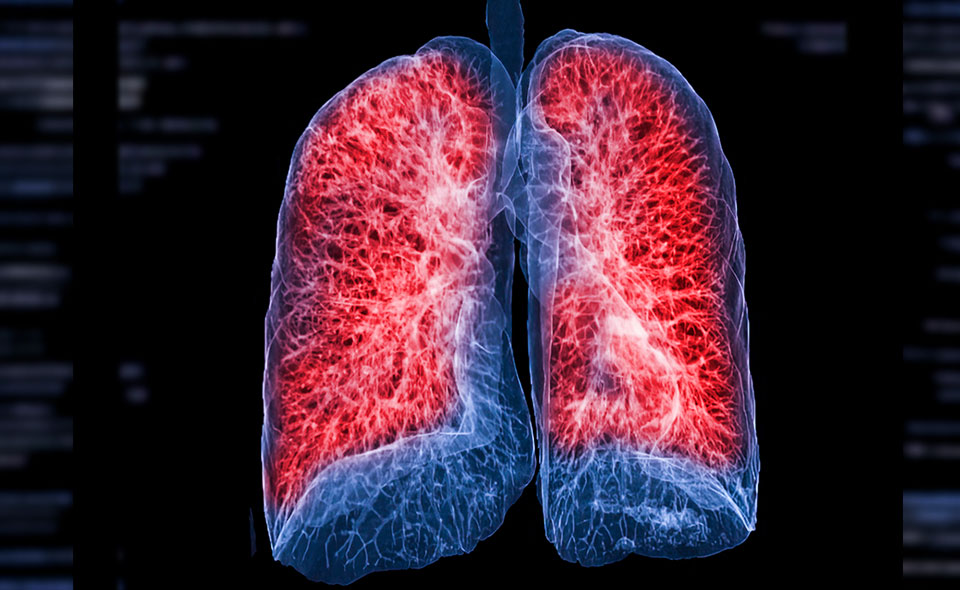
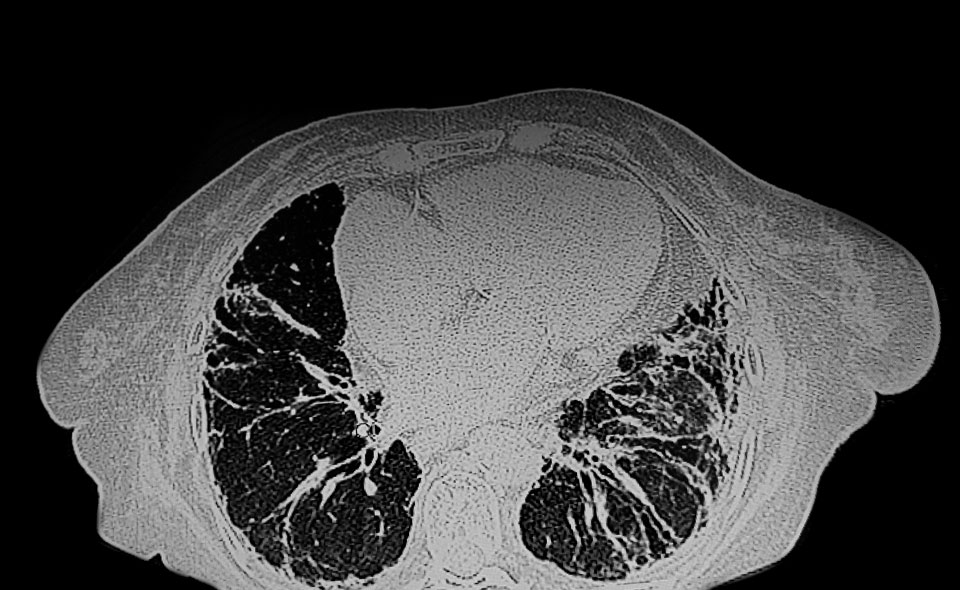
ISAR Bioscience investigates and develops novel therapies for lung diseases. The primary focus is on preventing long-term damage to the lungs. Pulmonary fibrosis is particularly feared, as it can develop in the context of various lung diseases—both following infections and in cases of autoimmune diseases. Macrophages, also known as phagocytes, play a special role in this process. These are specialized immune cells that engulf and digest pathogens and cellular debris. They play an important role in inflammation and wound healing. If they become overactivated, this leads to excessive inflammation and, in the long term, to the proliferation of connective tissue.
Our collaboration partner, Prof. Stefan Engelhardt, was the first to discover the role of certain microRNAs in the activation of macrophages. Large amounts of certain regulatory microRNAs are found in activated macrophages. Blocking these microRNAs can curb inflammatory processes. Small nucleic acids with targeted modifications are taken up by macrophages, bind to the microRNAs, and render them ineffective. Joint research on this topic was funded by the Bavarian Research Foundation and the Federal Ministry of Research.
This collaboration led to the spin-off company rnatics, in which ISAR Bioscience holds shares. The company is further developing therapeutics that target disease-causing microRNAs in macrophages. The most advanced candidate is the inhalable therapeutic RCS-21, which is intended to prevent severe cases of lung disease. The data collected in the laboratory and the results of the safety studies coordinated by ISAR Bioscience were submitted to the Federal Institute for Drugs and Medical Devices, which assessed them as sufficient preclinical “proof of concept” and authorized the conduct of an initial clinical trial (Phase 1a/b). These clinical trials in healthy volunteers are currently underway.
In addition, during the COVID-19 pandemic, ISAR Bioscience—in collaboration with teams from the Technical University of Munich—developed particularly rapid methods for the diagnosis of antibodies against SARS-CoV-2. Together with New York University, ISAR Bioscience has also invented a technology to block the replication of these viruses in the body. With the help of mRNA encapsulated in lipid nanoparticles (LNPs), infected cells can produce a nanobody (a mini-antibody) that stops viral replication.
Patent
Percipalle P, Esposito G, Holthoff HP, Desbordes SC (2023)
Compositions that Block Activation of the Sars-CoV-2 Replication and Transcription Complex (RTC)and Methods of Use Thereof.
Patentanmeldung WO 2023-041985 A3