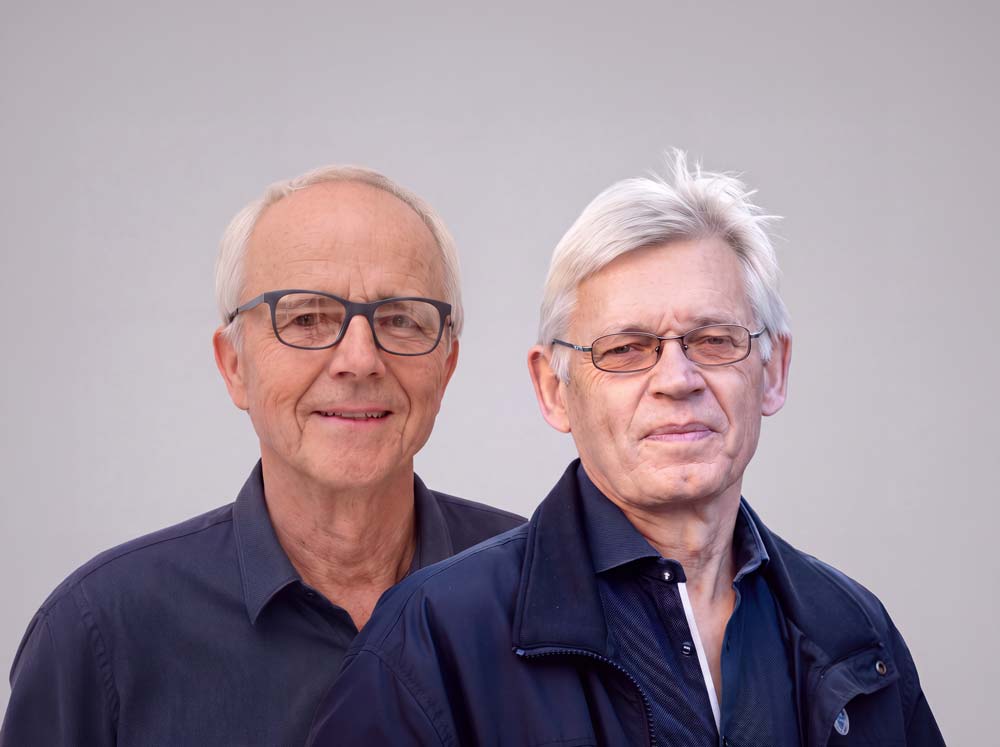
Congratulations to Peter Hegemann and Georg Nagel on winning the Nobel Prize in Physiology or Medicine
Martin Lohse, CEO of ISAR Bioscience, congratulates his long-standing collaboration partners.
For the invention of optogenetics, Georg Nagel of the University of Würzburg and Peter Hegemann of the Humboldt University Berlin will receive the 2026 Nobel Prize in Physiology or Medicine. They will be honored together with Karl Deisseroth of Stanford University.
In the 1990s, Peter Hegemann discovered proteins that enable green algae to respond to light. Georg Nagel succeeded in demonstrating that these proteins are ion channels that can be activated by blue light. Nagel and Hegemann named these proteins channelrhodopsins. In terms of their structure and light sensitivity, they resemble the human eye’s visual receptor, rhodopsin. Unlike rhodopsin, however, channelrhodopsins can conduct ions. Karl Deisseroth ultimately succeeded in introducing these proteins into individual nerve cells and manipulating them specifically with light. This laid the foundation for optogenetics: the science of influencing nerve cells — and thus perceptions and behavior — through light.
Georg Nagel researched the properties of channelrhodopsins at the University of Würzburg, including in the Collaborative Research Center “Regulatory Membrane Proteins” founded by Martin Lohse, and in the Transregional Collaborative Research Center “Receptor Light” at the Universities of Jena and Würzburg. As is often the case with groundbreaking research, funding for “Receptor Light” was discontinued earlier than hoped — just a few years before the Nobel Prize.
Peter Hegemann conducted research alongside Martin Lohse at the Max Planck Institute for Biochemistry in Martinsried in the 1990s. At that time, their work focused on rhodopsins in bacteria. In 2017 and 2018, the two jointly developed the concept for an imaging center in Berlin. Under the name “Imaging Innovation Center,” it is scheduled to open in the spring of 2027 at the MDC in Berlin-Buch.
Congratulations to both laureates!